
Introduction: A Political Echo Amid Market Tremors
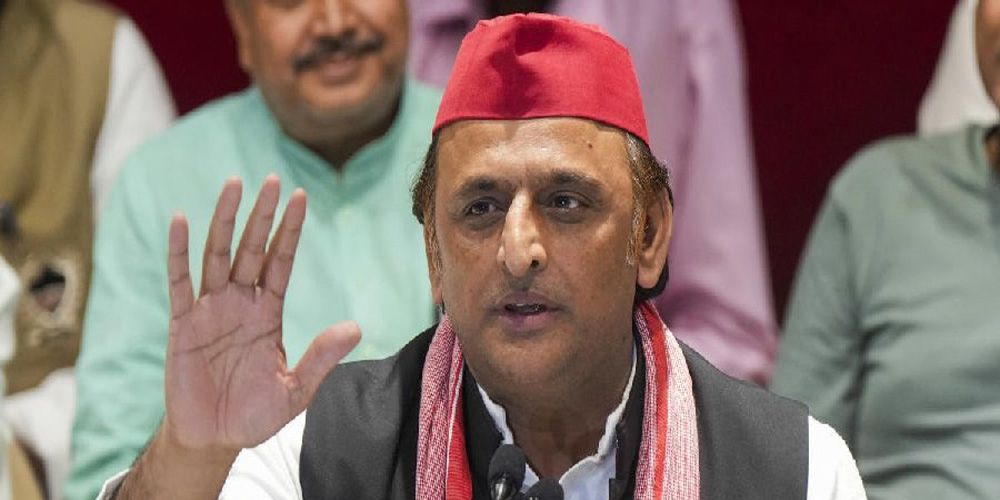
In the aftermath of a steep fall in Indian stock markets, the political discourse has once again heated up, with Samajwadi Party chief Akhilesh Yadav on stock market crash making headlines. As indices like the Sensex and Nifty dipped sharply, affecting retail investors and market sentiment, Yadav didn’t hold back in blaming the central government. His statement reflects growing political concerns about the economic stress being felt by common citizens due to market volatility.
The stock market crash and Akhilesh Yadav’s remarks are now part of a larger narrative being built by opposition parties ahead of the elections, raising questions about economic management, investor confidence, and government accountability. This issue has now transformed from a financial concern to a hot-button political debate.
Understanding the Stock Market Slide
The recent stock market crash in India has wiped out billions in investor wealth within days. Experts attribute the dip to a combination of global economic uncertainties, rising interest rates, foreign institutional pullback, and domestic concerns such as election-related jitters and fiscal imbalances.
Indices like the BSE Sensex and NSE Nifty recorded steep losses, affecting institutional portfolios and more crucially, retail investors. The slide wasn’t limited to large caps; mid-cap and small-cap stocks too experienced significant declines, exposing common investors to heavy losses.
It was in this financial context that Akhilesh Yadav’s comments on the stock market crash gained traction. His concern wasn’t rooted in corporate losses but in the financial stress felt by ordinary citizens who have invested their hard-earned savings in equities.
Akhilesh Yadav’s Critique of the Central Government
In a press interaction, Akhilesh Yadav blamed the BJP-led central government for the stock market crash, stating that “the policies of this government are hurting the common people, not the rich.” He emphasized that middle-class investors, many of whom were encouraged to invest in stocks through digital platforms and SIPs, are now watching their money disappear.
He pointed out the irony of how the government promotes financial inclusion and market participation, but has failed to put safeguards in place to prevent massive wealth erosion during market corrections. Yadav’s statement, part of a broader economic critique, underlined that financial stress at the bottom could eventually translate to social unrest.
The focus of Akhilesh Yadav on stock market crash implications demonstrates a shift in political narrative—where economic issues are no longer seen as abstract numbers but as everyday crises impacting households.
The Growing Role of Retail Investors in India
Over the past few years, India has witnessed an extraordinary rise in retail investor participation in the stock market. Fueled by apps, easy KYC processes, and COVID-era work-from-home culture, millions of first-time investors entered the equity space.
However, these investors are often the most vulnerable during a stock market collapse. Many lack deep financial literacy or the resources to absorb losses. When the market dips sharply—as it has in recent weeks—these very people face the brunt of economic mismanagement.
By calling out the government, Akhilesh Yadav on market crash impact brought attention to these silent sufferers. His remarks resonated with households where mutual fund values have plummeted, where SIPs are yielding negative returns, and where investments meant for retirement or children’s education have lost value.
A Political Strategy or Genuine Concern?
Critics of Yadav argue that his comments are politically motivated, timed ahead of crucial elections to exploit economic dissatisfaction. Yet, many also believe that his intervention reflects a larger truth—one that the ruling establishment has often downplayed.
The Akhilesh Yadav stock market statement fits into a broader opposition strategy to present the Modi government as disconnected from real economic pain. By focusing on how common people are suffering financially, he avoids abstract economic jargon and speaks in relatable terms.
Whether politically motivated or not, his words have struck a chord. They amplify public discontent over economic policies that seem to benefit corporates while exposing everyday investors to risk.
Investor Sentiment and the Trust Deficit
Beyond immediate losses, the more dangerous consequence of a market crash is the erosion of trust. When small investors lose faith in the markets, it affects long-term capital flow, retirement planning, and domestic investment rates.
Akhilesh Yadav’s reaction to the stock market crash taps into this growing trust deficit. He questioned how a government that claims to manage the world’s fastest-growing economy can’t prevent stock meltdowns that destroy middle-class wealth overnight.
He further pointed to the absence of serious government communication during the market fall—no finance ministry briefings, no SEBI reassurance, and no proactive investor protections. According to him, the silence from Delhi is both telling and damaging.
Past Precedents: Government Response to Market Crashes
Historically, governments have intervened—at least verbally—during market downturns to calm nerves. During the global financial crisis of 2008 or the pandemic-driven collapse of 2020, authorities made efforts to boost investor confidence.
However, in the current scenario, there has been little outreach from the central government. This absence, Yadav argues, reflects the lack of empathy and preparedness on the government’s part. His criticism over the stock market crash aligns with similar statements made by other opposition leaders about economic policy aloofness.
The Akhilesh Yadav stock market view not only critiques present failures but also demands a more transparent, responsible financial governance structure.
The Broader Economic Context: Inflation, Unemployment, and Unequal Growth
Yadav’s remarks didn’t come in isolation. They’re part of a broader concern about India’s K-shaped recovery, where the rich have gotten richer post-COVID while the middle class and poor have struggled. Market performance has been used as a proxy for economic growth by the government, and when that crashes, the narrative crumbles.
In this light, Akhilesh Yadav on stock market collapse becomes more than just a reaction to falling numbers—it’s a critique of the model of growth that’s being pursued. A model where speculative financial gains are prioritized over tangible welfare policies.
The market crash, thus, becomes symbolic of a deeper malaise. And Yadav’s framing positions him not just as a political opponent but as a voice of financial realism.
What Could the Government Have Done Differently?
Economists have suggested that more regulatory foresight, increased monitoring of volatile sectors, and stronger investor education could have softened the blow. They also argue that in times of global uncertainty, government communication becomes vital in maintaining domestic calm.
In this context, Akhilesh Yadav’s stock market commentary seems to ask: Where was the government’s economic leadership during the crisis? Why were policies not calibrated for small investors? And why is there no accountability when lakhs of Indians see their financial dreams collapse?
These are legitimate questions—and the government will need to answer them, not just politically but also financially.
Conclusion: The Market Crash as a Wake-Up Call
The recent stock market downturn in India, and the outcry it has sparked—especially from voices like Akhilesh Yadav—is more than just a financial event. It’s a wake-up call. It reminds policymakers that economic narratives built on stock indices are fragile and that real, sustainable growth must be inclusive.
Akhilesh Yadav on stock market crash and investor pain has articulated what many citizens feel: that they’re being left to fend for themselves in a volatile economic environment. His criticism isn’t just aimed at scoring political points—it echoes real fears and real losses suffered by ordinary Indians.
The government now faces a dual challenge—restoring investor confidence and responding to the political critique with substance. It must ensure that the equity culture it so proudly encouraged does not become a trap for unsuspecting citizens.
In the coming weeks, how the Centre handles both the economic and political fallout of this stock market crash will likely shape not only financial markets but also the tone of upcoming elections.


