Introduction: When Faith Meets Politics
In the spiritual fervor leading up to Ram Navami, a statement by BJP MP Arun Govil—famed for his portrayal of Lord Ram in the iconic TV series Ramayan—has stirred political and cultural discourse alike. Urging the West Bengal government to permit Ram Navami processions, Govil asserted that the festival has always been peaceful and should not be viewed through a lens of suspicion or fear. His appeal comes amidst reported restrictions and administrative hesitations around religious processions in certain parts of the state.
The statement by Arun Govil on Ram Navami processions in West Bengal adds a deeper layer to the ongoing political tensions between the BJP and the ruling Trinamool Congress (TMC), especially on issues surrounding religious expression. This call is more than just a cultural assertion—it is a strategic blend of politics, faith, and civil liberty advocacy.
Ram Navami: A Festival of Devotion, Not Division
Ram Navami, celebrated to mark the birth of Lord Ram, is one of the most sacred Hindu festivals. Traditionally associated with temple visits, devotional singing, and community celebrations, the day also includes colorful processions that express religious pride and collective spirituality.
Govil emphasized that the essence of Ram Navami processions, especially in states like Uttar Pradesh, Madhya Pradesh, and Bihar, has always been rooted in non-violence and devotion. By stating that there has “never been any aggression in Ram Navami”, Arun Govil’s message seeks to correct what he perceives as a politically motivated misrepresentation of these religious gatherings.
The BJP MP’s comments on Ram Navami processions in Bengal serve as a reminder that public faith-based events have long been part of India’s multicultural democratic fabric.
Arun Govil’s Statement: A Call to the Mamata Banerjee Government
Speaking to media personnel, Arun Govil expressed disappointment over the curbs and conditional approvals reported in West Bengal regarding Ram Navami processions. He urged the state administration to recognize the spiritual and peaceful nature of the festival rather than politicizing it.
Govil stated, “Why restrict a peaceful celebration? Ram Navami never incites violence—it uplifts people’s faith and unity.” This statement by Arun Govil on the West Bengal government’s stance on Ram Navami highlights the growing concern among BJP leaders that religious festivals are being unfairly regulated under the pretext of maintaining law and order.
In framing his appeal as a cultural and spiritual concern, rather than a political provocation, Arun Govil places the emphasis on tradition, peace, and the right to religious expression.
West Bengal’s Political Landscape and Ram Navami
West Bengal has become a political hotbed where religious events often intersect with law enforcement and electoral politics. In recent years, Ram Navami processions in Bengal have seen both enthusiasm and controversy, with sporadic incidents that are quickly politicized by both the ruling TMC and the opposition BJP.
The Mamata Banerjee-led government has often issued advisories or placed conditions on religious processions, citing communal harmony. Critics argue that such moves target Hindu events disproportionately, while the state maintains that it’s merely enforcing security and legal procedures uniformly.
In this backdrop, the demand by Arun Govil to allow Ram Navami processions in Bengal not only spotlights the tension but also adds emotional weight, given his symbolic stature as ‘Ram’ for millions of Indians.
Religious Freedom and Constitutional Rights
At the heart of Arun Govil’s appeal on Ram Navami processions in West Bengal lies a fundamental constitutional question: the right to freely practice and propagate religion. Article 25 of the Indian Constitution guarantees this right, with reasonable restrictions in the interest of public order.
Govil’s statement challenges the necessity and proportionality of such restrictions, especially when Ram Navami has largely been observed peacefully across states. He framed his message within a cultural rights narrative, asserting that Hindus should not be denied public expressions of their faith under assumed or exaggerated fears.
The BJP MP’s call to Mamata Banerjee’s government regarding Ram Navami resonates with a growing section of the public who feel that secularism in India should not translate to selective suppression of religious activities.
The Symbolism of Arun Govil’s Words
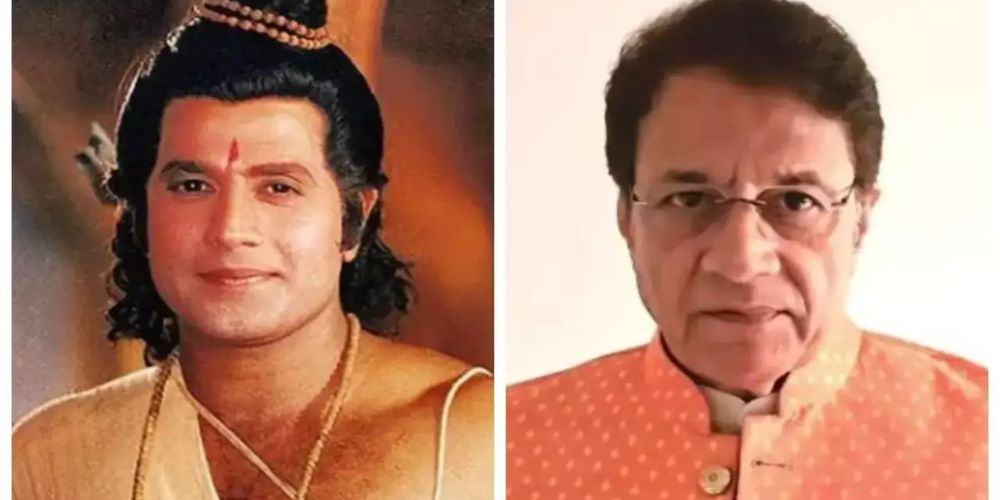
What makes Arun Govil’s statement on Ram Navami in Bengal powerful is not just the content, but the identity of the speaker. Govil is not just a parliamentarian—he is a cultural icon who once portrayed Lord Ram on television, shaping the spiritual imagination of an entire generation.
His words, therefore, carry emotional and symbolic significance. When Arun Govil defends Ram Navami as a peaceful celebration, it is perceived less as political rhetoric and more as a cultural reaffirmation. This blurs the line between personal conviction and political assertion, allowing his message to cut across party lines and appeal to common citizens.
In Bengal, where political identities and religious sentiments are intricately woven, Govil’s stance could rally grassroots support while also inviting criticism from ruling quarters.
Mamata Government’s Response and the Larger Debate
The Trinamool Congress government has not yet formally responded to Arun Govil’s appeal, but past statements from state leaders have emphasized the need for maintaining public order during religious festivals. The state administration often claims that certain processions can be “misused by fringe elements” to provoke communal tension.
However, such reasoning has been contested by BJP leaders and civil society groups who argue that blanket restrictions or excessive policing infringe upon religious freedoms. With Arun Govil now amplifying this concern on a national platform, the debate over religious liberty versus administrative oversight is likely to intensify.
The issue of Ram Navami processions in West Bengal may thus become a litmus test for the balance between faith and governance in modern Indian democracy.
Ram Navami and the Spirit of Unity
Despite the political discourse, Ram Navami continues to be celebrated peacefully across most of India, symbolizing Lord Ram’s values of righteousness, humility, and compassion. Arun Govil’s nostalgic connection to the festival evokes these very ideals.
By focusing on the non-aggressive history of Ram Navami processions, the BJP MP is not just defending the right to celebrate, but also promoting a version of Hinduism that aligns with inclusivity and discipline—values often attributed to the epic hero he once portrayed.
His call to permit Ram Navami processions in Bengal is also an invitation to remember that festivals should serve as bridges between communities, not wedges.
The Road Ahead: Dialogue or Deadlock?
The statements made by Arun Govil about Ram Navami in West Bengal open the door for a potential dialogue between the state government and religious organizations. Constructive engagement, transparency in permissions, and community coordination could help ensure peaceful celebrations without stoking political animosity.
However, if the issue continues to be viewed solely through a political lens, it risks becoming another chapter in the ongoing BJP-TMC rivalry, rather than an opportunity to promote cultural harmony.
The focus keyword “Arun Govil on Ram Navami processions in West Bengal” reflects not just a political stance, but a broader concern about how India navigates faith in the public sphere—balancing devotion with democratic governance.
Conclusion: A Call for Understanding, Not Division
Arun Govil’s appeal to the West Bengal government to allow Ram Navami processions serves as both a political and cultural moment. It reinforces the idea that festivals rooted in tradition and peace should not be hindered unless there is clear evidence of potential unrest. More importantly, it emphasizes that freedom of religious expression is a constitutional right, not a political favor.
By stating that “Ram Navami never involved aggression”, Arun Govil repositions the festival in its original light—as a celebration of virtue, not violence. His message also subtly encourages leaders across the political spectrum to rise above vote-bank politics and act in the spirit of inclusivity.
As India prepares to observe Ram Navami, the discussion around processions in Bengal offers a chance to reaffirm the country’s commitment to pluralism, dialogue, and mutual respect. Whether the Mamata Banerjee government responds with understanding or resistance will define not just this year’s celebration, but the evolving nature of secular governance in the country.
For More Update In News –Dailynewfeeds