As the political climate intensifies in Bihar ahead of key elections, Congress leader Shakeel Ahmad Khan has reaffirmed that Rahul Gandhi is coming to Bihar to fulfil his commitment of social unity and social justice. This statement not only underscores the Congress party’s long-standing ideological foundations but also signals a strategic recalibration aimed at reconnecting with grassroots voters across caste, class, and communal lines.
With the landscape of Indian politics evolving rapidly, Gandhi’s outreach in Bihar holds symbolic and practical significance. His upcoming visit is seen as a critical moment for the Congress, particularly in a state where regional politics often revolve around identity, empowerment, and historical grievances.
Historical Context: Bihar’s Long Struggle with Social Inequality
Bihar, one of India’s most populous and politically vibrant states, has long grappled with issues related to caste-based discrimination, economic disparity, and marginalisation. For decades, movements centered on social unity and social justice in Bihar have shaped the state’s political fabric. Leaders like Ram Manohar Lohia and Jayaprakash Narayan inspired generations to push for greater equality and inclusion.
It is against this backdrop that Rahul Gandhi’s commitment to social justice in Bihar is being reasserted. According to Congress MLA Shakeel Ahmad Khan, Gandhi’s vision aligns with the historic demand of the people of Bihar for dignity, rights, and representation. His visit seeks to rekindle this flame, providing hope to communities that have long felt left behind in the developmental race.
The Political Message: Social Justice as a National Agenda
In recent years, the Congress party has been trying to re-establish its identity as a party of inclusive governance. While the rise of regional parties in Bihar such as the RJD and JD(U) has eroded its earlier stronghold, Congress now seeks to reclaim moral and political ground by focusing on Rahul Gandhi’s commitment to social unity and justice.
Shakeel Ahmad Khan, known for his advocacy of social causes within the legislative assembly, remarked that Rahul’s visit is not just a formality—it is a statement of intent. He stressed that Gandhi will interact with Dalits, backward communities, minorities, youth, and women, addressing their specific concerns and amplifying their voices.
Rahul Gandhi’s efforts for social justice in Bihar will also intersect with issues like reservation in private sectors, education accessibility, and land reforms—long-pending demands from marginalised groups that form the bedrock of the Congress’ support base.
Congress and the Caste Census Debate
One of the most debated political themes in Bihar is the caste census. Several parties have made it a core issue, demanding a fresh count to ensure better resource distribution and policy planning. Rahul Gandhi supporting the caste census as part of social justice in Bihar aligns him with the aspirations of the backward and extremely backward classes.
Shakeel Ahmad Khan pointed out that Congress had earlier pledged full support to a nationwide caste census and believes that “without accurate data, there can be no equitable policy.” Rahul Gandhi is expected to reiterate this stand during his Bihar tour, thereby strengthening the Congress party’s stance on data-driven empowerment.
This initiative is part of a broader agenda where Rahul Gandhi’s push for social equality in Bihar is rooted in transparency, accountability, and targeted policy frameworks that reach the most vulnerable.
A Counter to Communal Polarisation
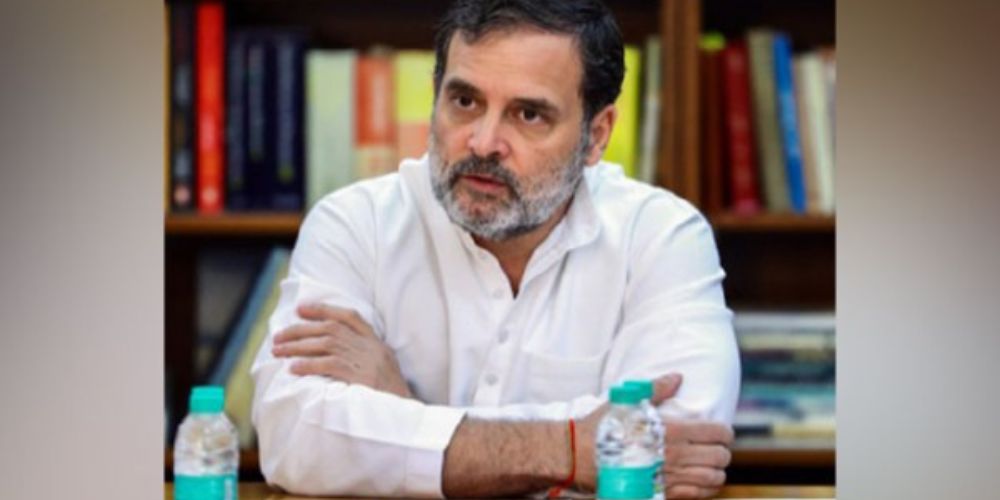
The Congress leader further argued that Rahul Gandhi’s visit to Bihar for social unity is a response to growing divisiveness and hate politics across the country. Shakeel Ahmad Khan accused certain political outfits of deliberately creating rifts within society to gain electoral advantage, warning that the soul of the nation is under threat.
Rahul Gandhi’s “Bharat Jodo Yatra” and subsequent campaigns have consistently highlighted themes of secularism, harmony, and fraternity. Bringing these themes to Bihar is especially poignant, given the state’s composite culture and long history of religious co-existence.
By advocating for social unity in Bihar through Rahul Gandhi’s leadership, Congress aims to position itself as a guardian of India’s pluralistic ethos. The party hopes to attract youth and civil society leaders who are increasingly disillusioned by divisive politics.
Targeting Youth, Women, and Marginalised Voters
Shakeel Ahmad Khan confirmed that Rahul Gandhi’s itinerary in Bihar includes multiple interactions with students, women groups, rural collectives, and SC/ST communities. These engagements will be more than symbolic photo-ops; they are designed to co-create policy dialogues on education, employment, and justice.
In particular, Rahul Gandhi’s plan to champion social justice in Bihar includes addressing the lack of jobs for educated youth and the failure to implement effective reservation policies in private employment. His team is working on presenting a charter of demands that encapsulates these voices and converts them into electoral promises backed by credible timelines.
Women, too, are central to this movement. Gandhi is expected to champion the long-pending Women’s Reservation Bill and press for greater political and economic participation of women from marginalised backgrounds—an often ignored dimension of social justice and unity in Bihar.
Rebuilding the Congress Machinery in Bihar
The Congress party has struggled with organisational weakness in Bihar for years. Despite being part of coalitions, it has often been seen as a junior partner without a strong independent presence. However, Rahul Gandhi’s visit focused on social justice and unity in Bihar is also intended to galvanize the party’s rank and file.
Khan noted that Rahul is personally engaging with block-level workers, youth leaders, and NSUI and Seva Dal functionaries to reignite grassroots energy. The aim is to rebuild a responsive, agile organisation capable of standing on its own in the political marketplace.
This organisational revamp, combined with the ideological thrust of Rahul Gandhi’s Bihar outreach for social justice, could help Congress regain relevance and emerge as a serious player once again in the state’s electoral calculus.
Challenges Ahead: Cynicism, Alliances, and Voter Expectations
While the Congress message of social unity and justice via Rahul Gandhi’s Bihar tour is emotionally and politically potent, several challenges remain. The party must address the public cynicism that stems from years of unfulfilled promises and sporadic leadership. Bihar’s electorate is politically aware and demands tangible outcomes over rhetoric.
Moreover, alliance management remains a tricky terrain. The dynamics between RJD, JD(U), and Congress are ever-shifting. For Rahul Gandhi’s social justice mission in Bihar to succeed, the party must tread carefully, ensuring cooperation without subservience.
Finally, translating moral positioning into electoral success requires mobilising public sentiment into votes. The Congress needs effective campaigners, innovative digital outreach, and robust booth-level networks to ensure that Rahul Gandhi’s vision of social justice in Bihar turns into a reality, not just a campaign slogan.
Conclusion: A Defining Moment for Congress in Bihar
As Congress leader Shakeel Ahmad Khan passionately articulated, Rahul Gandhi coming to Bihar to fulfil his commitment of social unity and social justice is a pivotal moment in the party’s journey. It represents both a return to core values and a new chapter of engagement with a socially dynamic and politically aware state.
Whether this visit becomes a turning point or a missed opportunity will depend on the depth of engagement, the sincerity of intent, and the ability to sustain the momentum beyond photo-ops. But one thing is clear—Rahul Gandhi’s presence in Bihar for social unity and justice is not just about politics; it is about reclaiming the idea of India where equality, dignity, and justice are not abstract ideals but lived realities.
As Bihar watches closely, so does the rest of the nation. The success or failure of this mission could well shape the trajectory of national politics in the months to come.
For More News Update – Dailynewfeeds