Introduction
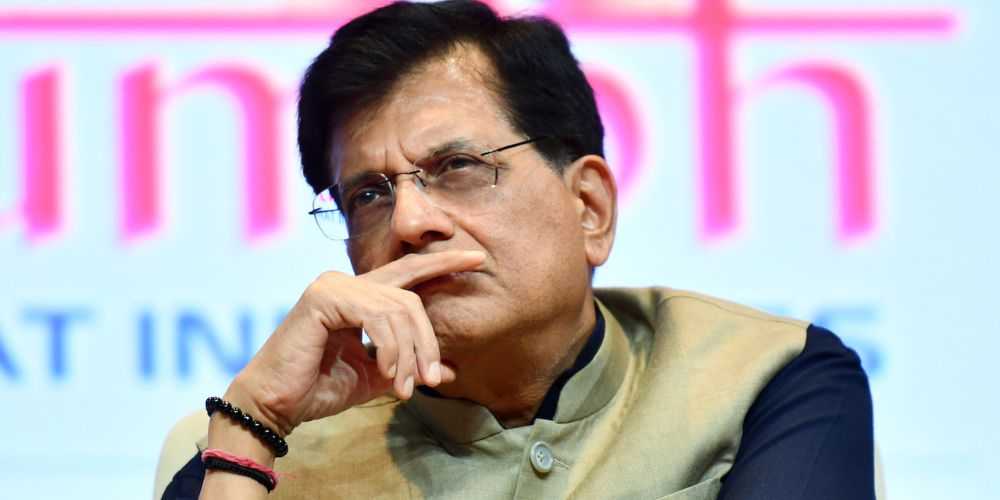
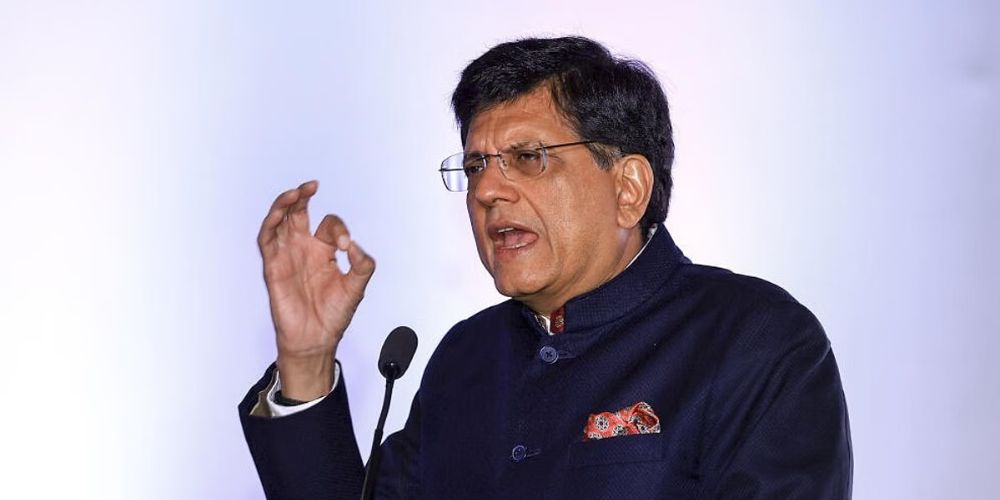
As the US’s 26 percent reciprocal tariffs on Indian goods come into force this Wednesday, Commerce and Industry Minister Piyush Goyal has summoned exporters and industry representatives for a high‑stakes round of talks. Dubbed the D‑Day parleys, this meeting—where Piyush Goyal will meet traders on Wednesday—aims to chart a way forward amid growing concerns over lost orders, squeezed profit margins, and an uncertain timeline for a bilateral trade agreement with Washington. With export sectors from pharmaceuticals to textiles bracing for impact, Wednesday’s discussions could prove pivotal in shaping India’s trade diplomacy and support measures in the weeks ahead.
1. The New US Tariff Regime: Origins and Implications
In late March, the Trump administration announced an additional 10 percent levy on a broad swathe of imports, to rise to 26 percent on April 9. This move affects over USD 8 billion of Indian exports annually, with pharmaceuticals, engineering goods, textiles, and chemicals among the hardest hit. Washington’s rationale has been to counter alleged trade imbalances, but Indian exporters warn that the sudden spike in duties will disrupt supply chains and divert orders to alternative suppliers.
When Piyush Goyal meets traders on Wednesday, he must address the immediate fallout of these tariffs: cancelled purchase orders, renegotiated contracts, and mounting inventory costs. Industry bodies estimate that the tariff shock could depress export growth by up to 2 percent of GDP in the current fiscal year unless mitigatory steps are taken. Beyond the numbers, there is a palpable anxiety among small and medium‑scale exporters, who lack the pricing power or market diversification of larger conglomerates.
2. The D‑Day Parleys: Agenda and Participants
The Wednesday meeting—Piyush Goyal’s parleys with traders—will convene senior ministry officials alongside representatives from export promotion councils, the Federation of Indian Export Organisations (FIEO), and major industry chambers such as CII and FICCI. Key agenda items include:
- Impact Assessment: A detailed review of sector‑wise losses since the tariff announcement, with exporters presenting real‑time data on order cancellations and enquiries.
- Fiscal Support: Proposals for extending additional production subsidies, interest subvention on pre‑ and post‑shipment credit, and broadening the remit of the Remission of Duties and Taxes on Exported Products (RoDTEP) scheme to cover tariff differentials.
- Bilateral Trade Agreement (BTA) Roadmap: A status update on negotiations with the US Trade Representative’s office, and strategies to accelerate the BTA talks to offset the tariff burden.
- Sectoral Dialogue: Breakout sessions for pharmaceuticals, engineering goods, textiles, and agriculture to formulate tailored interventions—ranging from expedited regulatory approvals to alternative market exploration.
By bringing all stakeholders under one roof, the government hopes to demonstrate that it is both responsive and proactive in tackling the US tariff challenge.
3. Traders’ Concerns and Expectations
3.1 Pharmaceuticals on the Brink
India’s pharma exports—valued at USD 8 billion in FY 2023–24—face an existential threat as the new duties bite. Generic drugmakers, who compete on razor‑thin margins, warn of production shutdowns if they cannot pass on the additional cost to importers. In Wednesday’s parleys, pharma associations are expected to press for an immediate inclusion of the tariff differential in the RoDTEP scheme, coupled with emergency low‑interest loans to maintain working capital.
3.2 Engineering and Auto Components
Exporters of machinery, auto parts, and steel products—another USD 7 billion segment—report that lead times have lengthened and customers are seeking alternative sources in Southeast Asia. They seek assurances that the government will fast‑track pending free‑trade agreement (FTA) talks with other markets, such as the EU and UK, to diversify destinations. The engineering lobby will also push for targeted freight subsidies to offset higher logistics costs.
3.3 Textiles and Apparel
Textile exporters—who employ millions in the hinterland—face order deferrals as US brands postpone buying decisions amid cost uncertainties. They plan to ask Piyush Goyal to meet traders on Wednesday to announce a special incentive package: duty‑free imports of certain man‑made fibre inputs, extension of the Rebate of State and Central Taxes and Levies (RoSCTL), and co‑financing of participation in overseas trade fairs to open up new markets.
3.4 MSMEs and Exporters’ Survival
Small and medium‑sized exporters, lacking the scale to negotiate price concessions, fear bankruptcy. They want the Commerce Ministry to ensure that Export Credit Guarantee Corporation (ECGC) cover is extended to orders cancelled due to tariffs, and that the interest equalisation scheme is ramped up. A unified plea is expected: without immediate relief, tens of thousands of MSME exporters could be forced out of business.
4. Government’s Support Measures: What’s on the Table
In anticipation of Wednesday’s discussions, the Commerce Ministry has drafted a menu of potential interventions:
- RoDTEP Enhancement: Expand the scope to explicitly compensate for US tariff differentials, making the scheme retroactive to April 5.
- Interest Subvention Boost: Raise the pre‑shipment and post‑shipment credit subsidy from the current 3 percent to 5 percent for affected sectors, valid for six months.
- Emergency Export Credit: Partner with public sector banks to offer collateral‑free loans up to ₹5 crore at subsidized rates for exporters hit by the tariff hike.
- Market Diversification Fund: Establish a dedicated fund to finance trade missions, digital marketing campaigns, and buyer‑seller meets in alternative markets across Latin America, Africa, and Central Asia.
- BTA Fast‑Track Cell: Set up an inter‑ministerial task force to engage with the US Trade Representative’s office, aiming to conclude the first tranche of the bilateral trade agreement within six months.
By packaging these measures, the government seeks to signal solidarity with exporters and cushion the immediate shock of the US reciprocal tariffs.
5. Accelerating Bilateral Trade Talks
A central plank of Wednesday’s parleys will be the roadmap for expediting the bilateral trade agreement (BTA) talks with the US. India and the US launched formal negotiations earlier this year, but progress has been hampered by differences over agriculture, digital trade, and tariff liberalization.
During the D‑Day parleys:
- The Commerce Ministry will unveil a proposed timeline with monthly milestones, covering tariff offer sheets, sectoral working groups, and dispute‑settlement mechanisms.
- Exporters will be invited to nominate sectoral experts to join Indian negotiating teams, ensuring that industry realities shape the government’s positions.
- The government will propose a preliminary “early harvest” package focusing on non‑controversial items—such as certain chemicals, textiles, and automotive components—that could see tariff cuts within three months.
By charting a credible BTA pathway, Piyush Goyal’s meeting with traders on Wednesday aims to assure exporters that long‑term solutions are in sight, even as short‑term relief is rolled out.
6. Looking Ahead: Risks and Opportunities
While Wednesday’s parleys are crucial, several challenges loom:
- Global Trade Uncertainty: Escalating protectionism worldwide means that India cannot rely solely on one market; diversification is imperative.
- Implementation Hurdles: Translating policy announcements into on‑ground relief—fast loan disbursals, timely RoDTEP credits, and effective BTA negotiations—will test bureaucratic agility.
- Geopolitical Dynamics: The US’s own domestic politics could influence the pace of the BTA talks; a change in administration or Congressional resistance may stall progress.
Yet, there are opportunities:
- Supply‑Chain Reconfiguration: As companies seek to de‑risk their China‑centric supply chains, India can position itself as an alternative manufacturing hub—if it resolves tariff uncertainties.
- Value‑Added Exports: The crisis could catalyze a shift from commodity exports to higher‑value goods—medical devices, electronics, and engineering services.
- Digital Trade: Embracing e‑commerce and digital services exports can open new avenues less susceptible to physical‑goods tariffs.
Wednesday’s D‑Day parleys will thus not only address immediate grievances but also set the tone for India’s evolving role in global trade.
Conclusion
When Piyush Goyal meets traders on Wednesday, he steps into a room fraught with anxiety, expectations, and high stakes. The new US reciprocal tariffs represent both a threat to established export sectors and a catalyst for India to accelerate trade diversification, negotiate robust market‑access deals, and deepen industry‑government collaboration. By combining short‑term relief measures—enhanced RoDTEP credits, emergency credit lines, and freight subsidies—with a fast‑tracked roadmap for the bilateral trade agreement, the Commerce Ministry can reassure exporters that they are not facing the tariff storm alone.
Ultimately, the success of these D‑Day parleys will be judged not by announcements made around the conference table, but by how quickly and effectively policies reach exporters’ bank accounts and how resilient India’s export engine emerges in the post‑tariff era. With the world watching, Wednesday’s meeting could prove to be a turning point in India’s trade diplomacy and its quest to become a reliable, diversified supplier on the global stage.
For More News Update –Dailynewfeeds