Introduction
In a significant financial push for Andhra Pradesh’s planned capital, the Central Government released over ₹4,200 crore to Andhra for the Amaravati capital project on April 1, 2025. This infusion follows the first disbursement of USD 205 million (approximately ₹1,600 crore) from the World Bank, part of a combined USD 1,600 million commitment by the World Bank and Asian Development Bank (ADB) for phase‑I of Amaravati’s development
Coupled with the Centre’s matching contributions, this tranche brings the total mobilisation advance to roughly ₹4,285 crore, marking a critical milestone in realising the greenfield capital envisioned for the state.
This blog explores the Centre’s funding for the Amaravati capital project, tracing the origin of the financing package, dissecting the funding structure, examining implementation frameworks, assessing political dynamics, and projecting the economic and social impact on Andhra Pradesh.
1. Origins of the Amaravati Vision
1.1 A New Capital for a Reorganized State
In 2014, following the bifurcation of undivided Andhra Pradesh, the residual state required a new administrative capital after Hyderabad became the capital of Telangana. Amaravati—located on the southern banks of the Krishna River—was selected for its central location and potential for planned urbanisation.
1.2 The Masterplan and Early Momentum
A masterplan drawn up by international urban design firms envisaged a modern, sustainable city with world‑class infrastructure: government complexes, residential zones, educational institutions, and recreational spaces. Initial progress, however, was hampered by funding constraints and political shifts at both state and Centre.
2. The Financial Architecture: ₹15,000 Crore Phase‑I Package
2.1 Multilateral Bank Commitments
In late 2024, the World Bank and ADB each committed USD 800 million (totaling USD 1,600 million or approximately ₹13,600 crore) to fund phase‑I of the Amaravati Capital Development project. Their support covers key infrastructure components—road networks, water supply systems, sewage treatment plants, and public transport corridors—under strict environmental and social safeguards
2.2 Centre’s Matching Contribution
Complementing the multilateral loans, the Central Government pledged an additional ₹1,400 crore, bringing the total funding envelope for phase‑I to ₹15,000 crore. Importantly, the Centre agreed to provide 25% of its committed amount upfront as a “Mobilisation Advance,” resulting in the release of over ₹4,200 crore to Andhra for the Amaravati capital project on April 1, 2025
3. Breakdown of the ₹4,285 Crore Mobilisation Advance
| Source | Amount (₹ crore) |
|---|---|
| World Bank (USD 205 million) | ~1,600 |
| ADB (USD 205 million) | ~1,600 |
| Centre’s Mobilisation Advance | ~800 |
| Total Mobilisation Advance | 4,000* |
*Note: Exact figure reported as ₹4,285 crore, accounting for currency conversion and minor adjustments
This initial tranche will fund immediate works: earth‑moving for arterial roads, procurement of bulk water treatment units, and the establishment of a project management office (PMO) to oversee contracts and compliance.
4. Conditional Releases and Progress Monitoring
4.1 Utilisation Certificates and Progress Reports
Subsequent instalments from both multilateral banks and the Centre hinge on demonstrable progress. The Andhra Pradesh Capital Region Development Authority (APCRDA) must submit utilisation certificates, audited accounts, and physical progress reports to trigger the next releases.
4.2 Safeguards and Oversight
The World Bank and ADB have embedded social and environmental safeguards into their loan agreements. Independent consultants will monitor resettlement of affected landowners, biodiversity impacts, and adherence to labour standards. This mechanism aims to prevent the delays and controversies that plagued earlier infrastructure drives.
5. Political Dynamics Surrounding Amaravati Funding
5.1 Centre‑State Relations
The Centre’s release of over ₹4,200 crore for the Amaravati capital project reflects renewed cooperation between Prime Minister Narendra Modi’s administration and Andhra’s ruling government. After years of friction over capital region boundaries and funding modalities, this tranche signals a thaw in relations.
5.2 Opposition Critiques
Opposition parties, including the YSR Congress Party (YSRCP), have questioned the viability of the Amaravati masterplan, arguing that funds might be better allocated to existing urban centres. However, the central funding push has largely quelled scepticism, at least on procedural grounds.
5.3 Leadership Endorsement
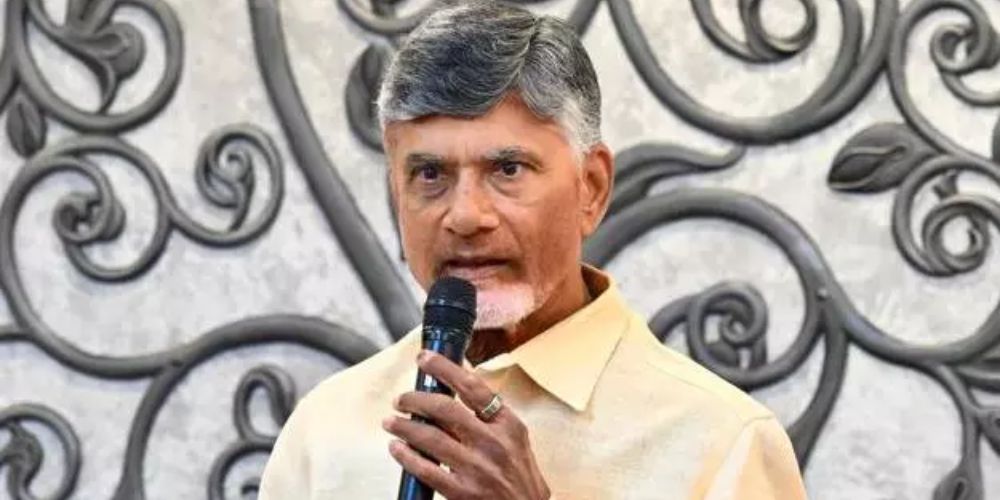
Chief Minister N. Chandrababu Naidu has welcomed the release, stating that it “reaffirms the Centre’s commitment to building a world‑class capital for Andhra Pradesh.” The Prime Minister is scheduled to preside over a relaunch of construction activities in Amaravati later in April 2025
6. Implementation Roadmap and Key Projects
6.1 Road and Transport Infrastructure
- Signal‑free corridors connecting the Legislative Complex to the High Court precinct.
- Mass Rapid Transit System (MRTS) feasibility studies funded under phase‑I.
6.2 Water and Sanitation
- Bulk water treatment plant with 200 MLD capacity to service government and residential zones.
- Sewage treatment facilities designed for tertiary treatment and reuse in landscaping.
6.3 Public Amenities and Green Spaces
- Development of a central civic plaza for public gatherings and cultural events.
- Urban forestry initiatives to plant native species along boulevards and parks.
6.4 Institutional Framework
The APCRDA’s PMO will manage procurement, contracting, and compliance. A Project Steering Committee—including representatives from the Centre, state government, and multilateral banks—will review quarterly progress and financial audits.
7. Economic and Social Impact
7.1 Job Creation and Skill Development
Phase‑I works are expected to generate over 50,000 direct jobs in construction, engineering, and project management. Ancillary industries—cement, steel, and logistics—will see demand spikes, creating indirect employment opportunities.
7.2 Urban Growth and Investment
By laying the groundwork for a planned capital, Andhra Pradesh aims to attract both domestic and foreign investment. The availability of modern infrastructure could catalyse the establishment of IT parks, educational institutions, and healthcare facilities in Amaravati.
7.3 Equitable Development
The loan agreements mandate inclusive development. Affected farmers and landowners are to receive fair compensation, skill‑training packages, and employment preferences in construction projects—ensuring that funding for the Amaravati capital project benefits local communities.
8. Challenges and Risk Mitigation
8.1 Land Acquisition Hurdles
Securing clear land titles and addressing grievances from small‑holder farmers remain sensitive issues. The APCRDA must expedite dispute resolution and maintain transparent grievance redressal mechanisms.
8.2 Environmental Concerns
Wetland conservation along the Krishna floodplain is critical. Independent environmental impact assessments will guide construction phasing to minimise ecological disruption.
8.3 Governance and Corruption Risks
Large infrastructure projects often face allegations of cost overruns and contract irregularities. The involvement of multilateral banks—with stringent procurement guidelines—provides a layer of accountability to curb malpractice.
9. Future Prospects: Beyond Phase‑I
9.1 Phase‑II and Private Sector Participation
Once phase‑I infrastructure is in place, the government plans to invite private developers for residential, commercial, and institutional zones. Public‑private partnerships (PPPs) could finance smart city components—digital governance platforms, e‑mobility solutions, and renewable energy installations.
9.2 Regional Integration
Amaravati’s development is part of a broader vision to link the capital region with Visakhapatnam and Vijayawada under the “Andhra Pradesh Golden Quadrilateral” economic corridor. Improved connectivity will drive trade and mobility across the state.
9.3 Measuring Success
Key performance indicators (KPIs) for Amaravati include on‑time completion of phase‑I works, absorption of allocated funds, job creation metrics, and investor commitments. Regular public disclosure of these KPIs will sustain momentum and public trust.
Conclusion
The Centre’s release of over ₹4,200 crore to Andhra for the Amaravati capital project represents a pivotal moment in the long‑awaited quest to build a purpose‑built administrative capital for Andhra Pradesh. Backed by substantial loans from the World Bank and ADB, and underpinned by rigorous oversight mechanisms, this tranche lays the foundation for transformative urban infrastructure.
While challenges—land acquisition disputes, environmental safeguards, and governance risks—persist, the collaborative framework between the Centre, state government, and multilateral institutions offers a robust model for accountable development. As phase‑I progresses, the success of Amaravati will be measured not only in kilometres of roads paved or litres of water treated but in the inclusive prosperity and global competitiveness it brings to Andhra Pradesh.
With political consensus largely in place and financial commitments secured, Amaravati’s greenfield dream stands poised to transition from blueprint to reality. The coming months will be critical: effective implementation of the Centre’s funding for the Amaravati capital project could well define the future trajectory of one of India’s most ambitious urban endeavours.
For More News Update –Dailynewfeeds