

In a recent address to the Lok Sabha, Union Home Minister Amit Shah expressed confidence in the Bharatiya Janata Party’s (BJP) prospects in the upcoming West Bengal Assembly elections. Drawing parallels to the party’s recent success in Delhi, Shah emphasized the anticipated extension of the Ayushman Bharat scheme to West Bengal, underscoring the BJP’s commitment to healthcare accessibility nationwide.
Delhi Victory as a Harbinger
The BJP’s recent electoral victory in Delhi marked a significant political shift, ending a 27-year hiatus from power in the capital. The party secured 47 out of 70 seats, displacing the incumbent Aam Aadmi Party (AAP), which had been in power since 2015. This win not only demonstrated the BJP’s growing influence but also served as a testament to its strategic campaigning and policy promises resonating with the electorate.
Ayushman Bharat: A Pillar of BJP’s Healthcare Agenda
Central to Shah’s optimism for West Bengal is the implementation of the Ayushman Bharat scheme, a flagship healthcare initiative launched by the Modi government. Designed to provide free health coverage to economically disadvantaged populations, the scheme aims to alleviate the financial burden of medical expenses for millions of families. Shah highlighted that with Ayushman Bharat now operational in Delhi, West Bengal remains a priority for its rollout, contingent upon the BJP’s electoral success in the state.
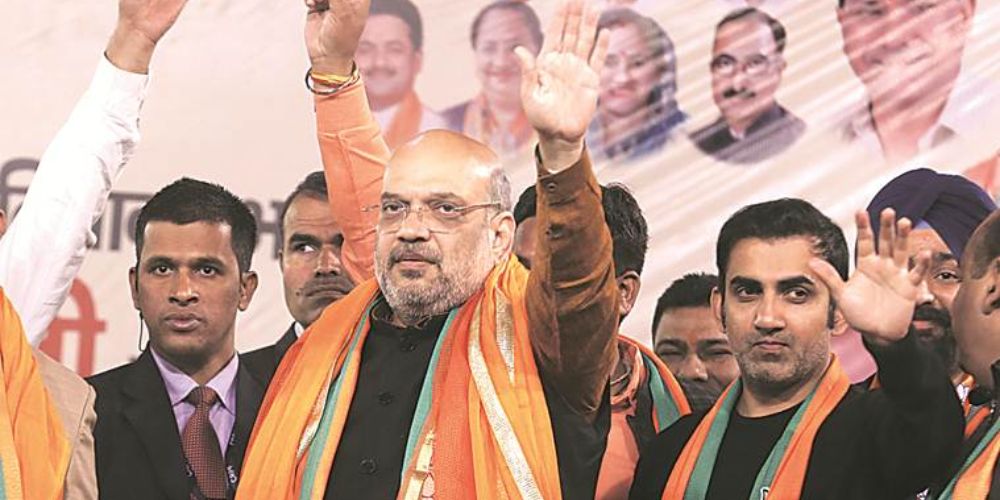
Strategic Implications for West Bengal
Shah’s remarks underscore the BJP’s strategic focus on expanding its footprint in West Bengal, a state traditionally dominated by regional parties. By leveraging the momentum from the Delhi victory and emphasizing the tangible benefits of central schemes like Ayushman Bharat, the BJP aims to position itself as a viable alternative to the incumbent state government. This approach reflects a broader strategy of integrating successful policy initiatives into electoral campaigns to garner voter support.
Challenges and Considerations
Despite the optimism, the BJP faces challenges in West Bengal, including entrenched political rivalries and unique regional dynamics. The party’s ability to replicate its Delhi success will depend on its capacity to address local issues, build robust grassroots networks, and effectively communicate its policy agenda to the electorate. Additionally, the implementation of central schemes like Ayushman Bharat requires collaboration with state authorities, highlighting the importance of cooperative federalism in achieving developmental goals.
Conclusion
Amit Shah’s projection of the BJP’s potential victory in West Bengal, inspired by the recent Delhi triumph and underscored by the promise of Ayushman Bharat’s implementation, reflects the party’s strategic vision for expanding its influence. As the political landscape evolves, the BJP’s emphasis on policy-driven campaigns and governance initiatives may play a pivotal role in shaping electoral outcomes. The forthcoming West Bengal Assembly elections will serve as a critical juncture in assessing the resonance of the BJP’s strategies and its commitment to advancing healthcare accessibility across India.


