Introduction
Tension erupted in Manipur’s Kangpokpi district on Saturday when a violent confrontation between two tribal communities left ten people injured, including two village chiefs. The clash, which took place in Konsakhul village, underscores the fragility of peace in a state still recovering from prolonged ethnic strife. With reports indicating that armed militants joined the fray, the incident has prompted heightened security measures and renewed calls for dialogue between communities. This 1,600‑word blog examines the clash between two tribal communities in Manipur, explores the historical and socio‑political context, analyzes the immediate aftermath and government response, and assesses the broader implications for stability and reconciliation in the region.
1. The Konsakhul Clash: Sequence of Events
On Saturday afternoon, a mob of approximately 200 people, reportedly accompanied by armed militants, descended upon Konsakhul village—a predominantly Naga settlement in Kangpokpi district. Witnesses say the assailants entered the village chanting slogans and wielding lathis, machetes, and improvised firearms. In the ensuing melee, ten villagers sustained injuries; among them were two village chiefs, Aimson Abonmai and D. Adam, who suffered serious head and limb wounds. The injured were evacuated to district hospitals in Imphal and Kangpokpi for treatment.
Local residents recount that the violence erupted over a disputed parcel of agricultural land on the outskirts of Konsakhul. A longstanding disagreement over land boundaries had flared in recent weeks, with both Naga and Kuki‑Zo claimants accusing each other of encroachment. On the day of the clash, a routine patrol by Kuki‑Zo youth in the disputed area allegedly provoked a Naga response, leading to an exchange of stones and sticks. What began as a scuffle rapidly escalated when reinforcements arrived on both sides, culminating in a full‑blown attack on the village.
2. Historical Context: Ethnic Tensions in Manipur
Manipur’s history is marked by cycles of ethnic tension, particularly between hill‑dwelling tribal communities (such as the Nagas and Kuki‑Zo) and the Meitei majority of the Imphal Valley. Land disputes, competition for resources, and demands for tribal autonomy have fueled intermittent violence since the 1990s. The post‑2019 period saw renewed clashes after the Meitei community’s push for Scheduled Tribe status, which tribal groups perceived as a threat to their customary rights and territorial integrity.
While the 2023–2025 Manipur violence primarily pitted Meiteis against Kuki‑Zo tribes, intra‑tribal disputes have also flared periodically. Disagreements over village boundaries, shifting demographics, and competition for government benefits under tribal welfare schemes have all contributed to mistrust. The clash between two tribal communities in Manipur at Konsakhul is thus part of a broader tapestry of identity‑based conflict in the state.
3. Immediate Aftermath and Security Response
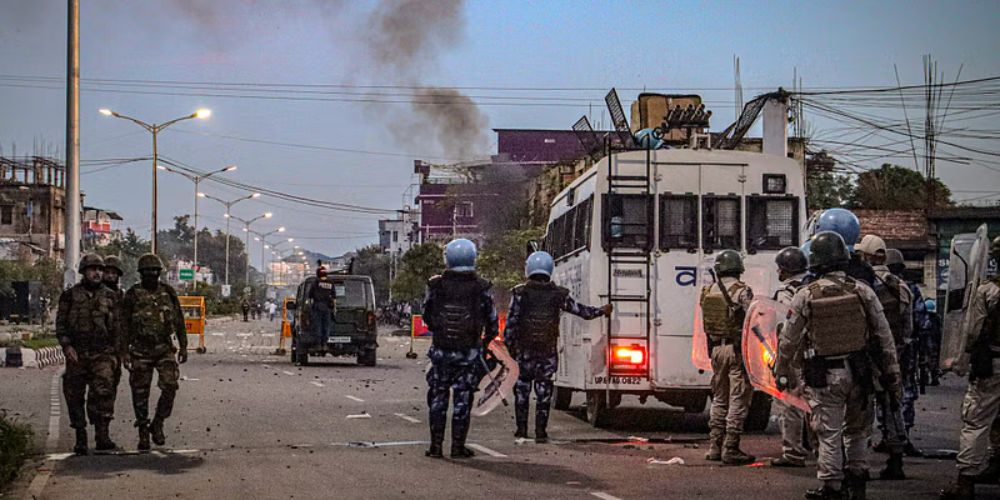
Within hours of the attack, reinforcements from the Manipur Police’s Counter‑Insurgency and Anti‑Terrorist units were deployed to Konsakhul and neighboring villages. Additional companies of the Assam Rifles and the Central Reserve Police Force (CRPF) were placed on alert along key hill‑valley border points to prevent spillover violence. Checkpoints were set up on all major roads leading into Kangpokpi district, and a temporary curfew was imposed in Konsakhul and three adjacent panchayats.
District officials convened an emergency meeting with village elders from both communities, urging restraint and promising a swift investigation. The Deputy Commissioner of Kangpokpi announced that an inquiry team, led by a senior superintendent of police, would record statements, collect forensic evidence, and work with the local magistrate to ensure perpetrators are brought to justice.
4. Voices from the Ground
4.1 Naga Community Perspective
Aimson Abonmai, one of the injured village chiefs, lamented the breakdown of traditional dispute‑resolution mechanisms: “We have customary councils that once handled boundary issues peacefully. But in recent years, external influences and the presence of armed groups have eroded those structures.” Abonmai urged the state government to revive customary arbitration and involve civil society organizations in mediating land disputes.
4.2 Kuki‑Zo Community Perspective
A spokesperson for a local Kuki‑Zo youth association defended their members’ right to patrol ancestral lands: “Our forefathers tilled this land. When Naga villagers began cultivating beyond agreed boundaries, our youth stepped in. It is regrettable that things turned violent, but we will not cede our traditional territories.” The spokesperson called for the setting up of a joint boundary commission to survey and demarcate disputed lands.
4.3 Civil Society and Religious Leaders
Religious leaders from both communities held an impromptu peace march in Kangpokpi town, appealing for calm and mutual understanding. A Catholic priest from the Naga community and an Evangelical pastor from the Kuki‑Zo community jointly called for a suspension of retaliatory acts and pledged church‑led mediation. “Our faith teaches us reconciliation,” they said, “and we stand ready to facilitate dialogue.”
5. Government and Administrative Measures
Recognizing the delicate situation, the Manipur government announced a multi‑pronged response:
- Fact‑Finding Commission: A three‑member commission, including a retired High Court judge and senior bureaucrats, will investigate the root causes of the clash and recommend long‑term solutions.
- Security Enhancement: Permanent deployment of additional police outposts along the hill‑valley border and increased patrolling in vulnerable villages.
- Boundary Survey: The state revenue department will initiate a cadastral survey of all disputed lands in Kangpokpi district, using GPS mapping to create an authoritative record.
- Community Dialogue: Funding will be allocated for village‑level peace committees comprising elders, youth representatives, and civil society actors to preempt future conflicts.
- Compensation and Relief: A relief package of ₹2 lakh each for the families of the two injured village chiefs and ₹25,000 for other injured villagers, along with free medical care.
These measures aim to address both the immediate fallout of the clash between two tribal communities in Manipur and the underlying structural issues that give rise to such violence.
6. The Role of Armed Militants
A disturbing feature of the Konsakhul incident was the involvement of armed militants. While Manipur has long grappled with insurgent groups, their participation in local disputes marks a worrying trend of criminalization of ethnic conflicts. Security analysts warn that militants—both Kuki‑Zo and Naga—may exploit community tensions to recruit cadres and legitimize their presence.
The government has vowed to clamp down on unauthorized armed groups operating in civilian garb. A senior police officer stated: “Anyone found carrying weapons without authorization, or facilitating armed mobilization, will be booked under stringent anti‑terror laws.” Intelligence units are being tasked with tracking the movement of arms and identifying militant links to village councils.
7. Broader Implications for Manipur’s Peace Process
The clash between two tribal communities in Manipur comes at a time when the state is tentatively moving towards a political settlement of the larger Meitei‑Kuki impasse. Tripartite talks among the Centre, state government, and representatives of Meitei and Kuki‑Zo groups have resumed in New Delhi, aiming to end 23 months of widespread ethnic violence. The Konsakhul incident underscores the importance of including Naga stakeholders and addressing intra‑tribal disputes in any comprehensive peace accord.
Observers note that lasting peace in Manipur requires a multi‑layered approach: political negotiations at the highest level, institutional reforms to ensure equitable resource sharing, and grassroots reconciliation initiatives. Without attention to village‑level grievances—such as boundary disputes—macro‑level agreements risk being derailed by localized flashpoints.
8. Pathways to Sustainable Peace
Drawing lessons from past interventions, experts recommend the following to prevent future clashes:
- Legal Clarification of Customary Rights: Enact state legislation recognizing and codifying customary land‑use norms of tribal communities, providing a legal framework for dispute resolution.
- Joint Boundary Committees: Establish permanent boundary committees with equal representation from Naga, Kuki‑Zo, and state revenue officials to oversee land surveys and mediate disagreements.
- Community Policing Models: Deploy community‑oriented policing units trained in conflict resolution and cultural sensitivity, fostering trust between law enforcement and tribal villages.
- Economic Collaboration Projects: Launch inter‑community development projects—such as cooperative agriculture, rural tourism, and handicraft clusters—that incentivize collaboration and interdependence.
- Youth Engagement and Education: Create youth leadership programs that promote inter‑tribal dialogue, peace education in schools, and joint cultural festivals celebrating shared heritage.
Implementing these measures can transform the clash between two tribal communities in Manipur from an isolated incident into a catalyst for stronger institutions and community resilience.
9. Conclusion
The violent episode in Konsakhul village, where ten villagers were injured in a clash between two tribal communities, highlights the enduring complexities of identity, land, and authority in Manipur. While immediate security responses and relief measures are essential, they must be complemented by structural reforms and sustained dialogue. The state government’s promise of boundary surveys, fact‑finding commissions, and community forums offers a roadmap—but success will depend on genuine political will and active participation from all stakeholders.
As Manipur inches towards a broader peace settlement, it must not overlook the micro‑level disputes that can spark wider conflagrations. By addressing the roots of the clash between two tribal communities in Manipur—through legal clarity, inclusive institutions, and community empowerment—the state can pave the way for a more peaceful and prosperous future for all its people.
For More Updated News – Dailynewfeeds