Introduction: A Step Toward Peace in the Valley
The prolonged ethnic unrest in Manipur has drawn nationwide concern, with communities grappling with violence, displacement, and distrust. In a bid to de-escalate tensions and find a sustainable solution, the Government of India has initiated high-level meetings with representatives from both the Meitei and Kuki communities. This marks a critical development in the ongoing efforts aimed at Meitei-Kuki conflict resolution in Manipur.
The meeting, chaired by senior officials from the Ministry of Home Affairs (MHA), was aimed at facilitating a platform where both ethnic groups could present their grievances, share expectations, and discuss pathways to harmony. The talks are being closely watched as a potential turning point in a crisis that has left a deep scar on Manipur’s socio-political fabric.
Background of the Meitei-Kuki Conflict
The Meitei-Kuki ethnic conflict in Manipur has its roots in decades of identity politics, tribal rights, and territorial claims. The Meiteis, who predominantly inhabit the Imphal valley, are primarily Hindu and have demanded Scheduled Tribe (ST) status. This move has been opposed by the Kukis, a tribal Christian community mostly residing in the hill districts, who believe such a status would dilute their rights and dominance in tribal administration.
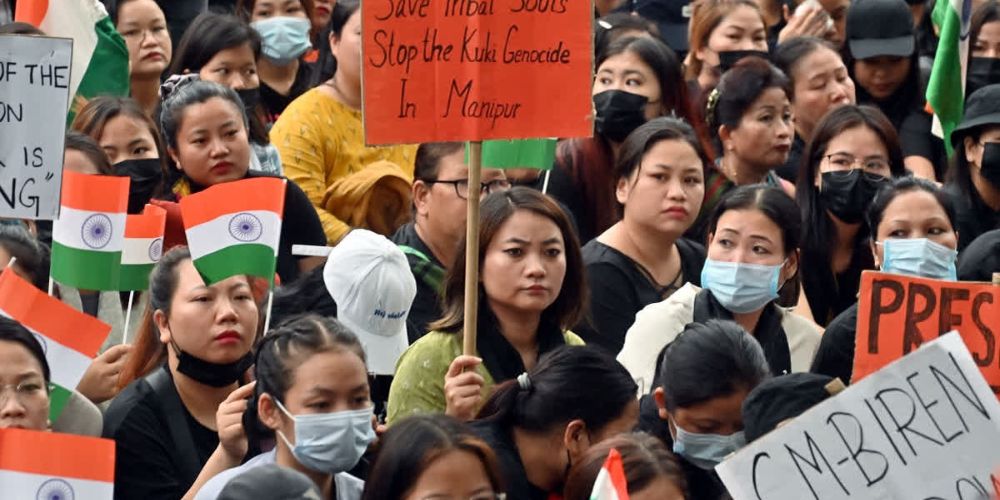
Tensions escalated in early May 2023 after a Tribal Solidarity March organized in protest of the Meitei ST demand. What began as a political demonstration spiraled into violent ethnic clashes, leading to widespread arson, displacement of over 60,000 people, and more than 200 deaths.
Efforts at Meitei-Kuki peace dialogues have previously failed to yield concrete results, owing to deep mistrust and diverging demands. However, the new round of talks offers a glimmer of hope amid the chaos.
High-Level Meeting: Composition and Agenda
The recent meeting saw participation from key officials of the Union Home Ministry, state government representatives, and selected leaders from both the Meitei and Kuki communities. Though the discussions were held behind closed doors, sources indicate that the talks focused on five key issues:
- Immediate ceasefire and end to violence
- Rehabilitation of displaced families
- Framework for long-term political dialogue
- Legal justice for victims
- Territorial and administrative reforms
By inviting both communities to the same table, the Centre hopes to set the groundwork for a structured and multi-phase plan for resolving the Meitei-Kuki conflict in Manipur.
Union Home Minister Amit Shah has personally monitored the developments, indicating the seriousness with which the Centre views this conflict. Special security measures were in place to ensure that leaders could travel safely to attend the discussions.
Meitei Representation: Voices from the Valley
Meitei leaders have emphasized their demand for recognition, equality, and protection of their rights in the face of what they describe as increasing marginalization. A section of the Meitei community argues that granting ST status would help them preserve their indigenous identity and allow access to land rights in the hill areas.
At the meeting, Meitei representatives reportedly stressed the need for administrative balance, greater security in the valley regions, and a roadmap to return displaced Meitei individuals to their homes in the hills.
However, the demand for ST status remains a contentious issue. During the Manipur peace meeting between Meitei and Kuki leaders, Meitei negotiators appeared open to alternative forms of empowerment, such as economic packages or educational guarantees, in lieu of immediate ST status.
Kuki Response: Protecting Tribal Autonomy
Kuki representatives voiced concerns over their community’s safety, loss of homes, and fears of being sidelined in their own traditional lands. The Kukis have long opposed the extension of valley-based political control into hill areas, citing historical autonomy and cultural difference.
During the recent talks on Kuki-Meitei conflict resolution in Manipur, the Kuki side demanded the formation of an autonomous hill council, protection under the Sixth Schedule, and justice for those killed during the violence.
The Kukis are also calling for demarcation between the valley and hill administrative regions, urging the Centre to intervene directly in the state’s governance to ensure fairness and safety. Trust in the current state government remains low, with many Kukis demanding a neutral administrative body to mediate and implement post-conflict rehabilitation.
Challenges on the Path to Reconciliation
Despite the positive optics of dialogue, resolving the Meitei-Kuki conflict in Manipur is fraught with challenges. The fundamental issue lies in territorial claims, cultural identity, and political representation. Both communities believe they are defending their existence, which makes compromise difficult.
The Meitei desire for inclusion and modern rights clashes with the Kuki desire for preservation and protection of tribal autonomy. Each sees the other’s gain as a potential loss, creating a zero-sum scenario.
Adding to the complexity is the presence of armed groups on both sides. While the government has deployed central forces and imposed curfews, simmering resentment in Manipur’s ethnic corridors continues to fuel tensions. There’s also the issue of internet blackouts and restricted media coverage, which further hinders transparency and fuels misinformation.
Centre’s Strategy: From Dialogue to Draft Plan
The Union Government has clarified that the peace talks are the first phase of a broader three-tier strategy:
- Short-Term Measures: Ceasefire enforcement, security assurance, and basic rehabilitation for displaced persons.
- Mid-Term Engagement: Formal political dialogues mediated by neutral experts and the development of a Truth and Reconciliation Commission.
- Long-Term Framework: Legal and constitutional reforms, including discussion on territorial restructuring and tribal protections.
In the context of Manipur conflict resolution talks between Meitei and Kuki leaders, the government aims to integrate perspectives from civil society, students, women’s organizations, and religious leaders. The objective is not just to calm violence, but to establish durable peace with mutual respect.
The Home Ministry has also announced plans to conduct special peace-building workshops in the conflict zones to encourage citizen-level engagement.
Local Reactions: Hope Mixed with Skepticism
While the government’s initiative to hold peace talks has been welcomed in principle, ground-level reactions remain mixed. In Imphal, Meitei youth groups expressed cautious optimism, calling the talks “a good beginning, but not a solution in itself.”
On the other hand, in Churachandpur, a stronghold of the Kuki population, civil rights groups voiced concerns about whether their demands would be genuinely acknowledged or politically sidelined.
For many families living in relief camps, the immediate concern remains safety and shelter. The success of Meitei-Kuki reconciliation efforts will ultimately depend on how quickly real changes follow from these initial dialogues.
Role of Civil Society and Media
Civil society organizations, including human rights NGOs, women’s groups, and peace volunteers, have been advocating for dialogue since the conflict broke out. Many of these groups have expressed willingness to act as neutral observers or even mediators in future discussions.
Media coverage, though restricted in parts of Manipur, has been instrumental in amplifying voices of those affected and in pushing for accountability. Efforts to resolve Meitei-Kuki conflict in Manipur have gained national attention, partly due to pressure from journalistic investigations, human rights reports, and social media activism.
International Observers and Diplomatic Watch
The ethnic nature of the conflict, along with its proximity to international borders (Myanmar), has led some foreign observers to keep a close eye on the developments. While the Government of India has not welcomed external interference, the international community, including human rights watchdogs, has issued calls for peaceful resolution and protection of minority rights.
The peace process in Manipur between Meiteis and Kukis is seen not only as a domestic issue but also as a test of India’s democratic capacity to handle internal ethnic strife.
Conclusion: A Fragile Beginning, But a Beginning Nonetheless
The recent meeting between the government and Meitei-Kuki representatives signifies a crucial first step toward ending one of the most complex and volatile ethnic conflicts in modern Indian history. While mistrust and unresolved demands persist, the very fact that dialogue has been initiated sets a hopeful precedent.
The road to complete Meitei-Kuki conflict resolution in Manipur will be long and fraught with negotiation, compromise, and healing. It will require not just political will, but empathy, inclusiveness, and the ability to envision a shared future.
Manipur deserves peace—not as a momentary pause, but as a permanent promise.