Introduction
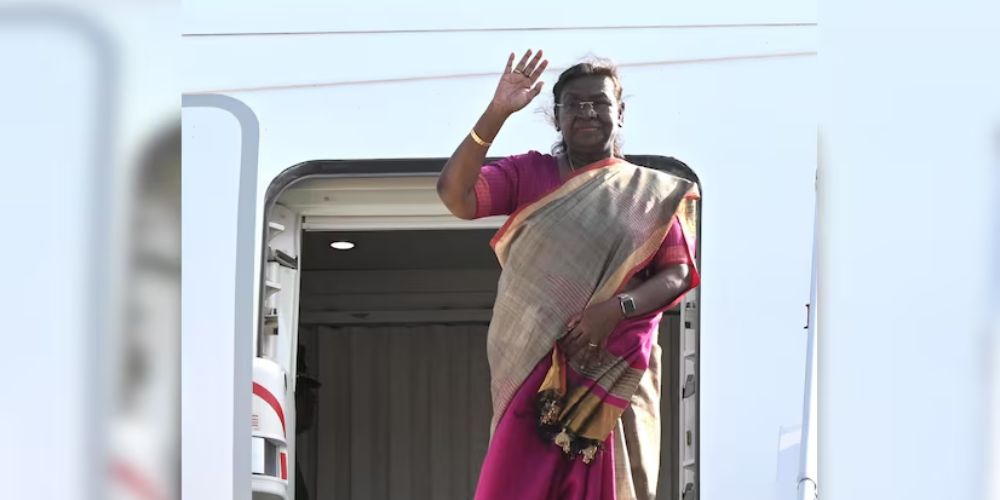
Late Sunday night local time, President Droupadi Murmu arrived in Portugal’s Lisbon, marking the beginning of a landmark four‑day state visit to Portugal and Slovakia from April 7–10, 2025. This trip, the first by an Indian head of state to Portugal in 27 years and to Slovakia in 29 years, underscores India’s intent to deepen political, economic, cultural, and strategic ties with these key European Union partners. Over the next 1,600 words, we’ll explore the significance of President Murmu’s arrival in Lisbon, outline her packed itinerary, analyze the diplomatic and economic objectives of the state visit, and assess the broader implications for India‑EU relations.
1. A Symbolic Return: President Murmu’s Arrival in Lisbon
When President Droupadi Murmu arrived in Lisbon late on April 6, she stepped onto Portuguese soil at a moment rich with symbolism. India and Portugal are commemorating 50 years of uninterrupted diplomatic relations in 2025, and the last presidential visit in 1998 by President K.R. Narayanan laid the groundwork for successive engagements. By choosing Lisbon as her first port of call, President Murmu signals India’s commitment to reinvigorating this half‑century partnership.
Her arrival ceremony at Humberto Delgado Airport was attended by senior Portuguese officials, including Foreign Ministry representatives and the Indian ambassador to Portugal. As the Indian national anthem played, President Murmu was accorded a guard of honour, setting a respectful and celebratory tone for what promises to be a high‑profile visit.
2. The Itinerary: From Delegation‑Level Talks to Community Outreach
2.1 Delegation‑Level Talks with President Sousa
On April 8, President Murmu will hold delegation‑level talks with President Marcelo Rebelo de Sousa in Belém Palace. These discussions will cover a broad agenda: strengthening political dialogue, enhancing economic cooperation, collaborating on renewable energy and digital transformation, and exploring joint research in pharmaceuticals and biotechnology.
2.2 Meetings with Prime Minister and Parliamentary Leaders
Following her tête‑à‑tête with President Sousa, President Murmu will meet Prime Minister Luís Montenegro at São Bento Palace. The two leaders are expected to exchange views on the India‑EU Free Trade Agreement, maritime security in the Indian Ocean region, and capacity building in defence manufacturing. Additionally, President Murmu will be received by the Speaker of the Portuguese Parliament, José Pedro Aguiar‑Branco, reinforcing legislative goodwill.
2.3 Banquet Dinner and Mayoral Reception
To honor her visit, President Sousa will host a state banquet at the Presidential Palace, featuring Portuguese and Indian dignitaries, business leaders, and cultural ambassadors. The next day, the Mayor of Lisbon will host a civic reception at Lisbon City Hall, spotlighting the Indian diaspora in Portugal—estimated at over 125,000 strong—and acknowledging their contributions to bilateral ties.
2.4 Engagement with the Indian Community and Academia
President Murmu’s schedule includes an event at the University of Lisbon, where she will address Indian researchers and students. She will also meet leaders of the Indian community, visiting the Mahatma Gandhi Garden in central Lisbon to pay homage and interacting with local entrepreneurs, artists, and cultural figures. These engagements underscore the “people‑to‑people” dimension of the state visit.
3. Diplomatic Goals: Deepening India‑Portugal Relations
3.1 Political and Strategic Cooperation
By arriving in Lisbon and engaging top Portuguese leadership, President Murmu aims to elevate India‑Portugal relations from cordial to strategic. Both countries share interests in maritime security, counter‑terrorism, and upholding a rules‑based international order. Joint naval exercises in the Indian Ocean and information‑sharing agreements are likely to feature in their communiqués.
3.2 Economic Partnership and Trade
Trade between India and Portugal has surged by nearly 50% over the past five years, reaching approximately USD 1.5 billion. Key exports from India include pharmaceuticals, textiles, and automotive components, while Portugal supplies machinery, wine, and cork products. During her visit, President Murmu will inaugurate the India‑Portugal Business Forum, where industry captains will discuss opportunities in renewable energy, digital services, and startup collaboration.
3.3 Science, Technology, and Innovation
Portugal’s strong footprint in renewable energy—particularly wind and solar power—complements India’s ambitious green energy targets. Memoranda of understanding (MoUs) are expected in areas such as offshore wind farms, smart grids, and green hydrogen. Additionally, joint research programs in biotechnology and information technology will be launched, leveraging Portugal’s tech hubs and India’s research institutions.
4. Cultural Diplomacy: Showcasing India’s Soft Power
4.1 Cultural Performances and Exhibitions
A highlight of President Murmu’s visit will be an Indian cultural evening at the Calouste Gulbenkian Foundation, featuring classical dance, music, and a photo exhibition on India’s diverse heritage. This event will not only entertain but also educate Portuguese audiences about India’s rich traditions, strengthening cultural bonds.
4.2 Gandhi Legacy in Lisbon
President Murmu will visit the Alameda Mahatma Gandhi, a public square dedicated to India’s Father of the Nation. There, she will lay a wreath at the Gandhi statue, reaffirming the shared values of non‑violence, democracy, and human rights that underpin India‑Portugal relations.
5. The Slovakia Leg: Expanding the EU Outreach
After concluding her engagements in Portugal on April 9, President Murmu will fly to Bratislava for the second leg of her journey. This first presidential visit to Slovakia in 29 years will include meetings with President Peter Pellegrini, Prime Minister Robert Fico, and National Council Speaker Peter Pellegrini. Key themes will be expanding bilateral trade, collaborating on EU‑India dialogues, and exploring Slovakia’s expertise in automotive engineering and advanced manufacturing.
6. Broader Implications: India’s EU Strategy
6.1 Signaling India’s EU Focus
President Murmu’s visits to Portugal and Slovakia, back‑to‑back, send a clear message: India views the EU not as a monolith but as a mosaic of partners. By engaging smaller but strategically placed EU members, India diversifies its European partnerships beyond traditional anchors like Germany and France.
6.2 Advancing the India‑EU Free Trade Agreement
Negotiations on the long‑pending India‑EU Free Trade Agreement (FTA) are at a critical juncture. Portugal and Slovakia, as EU Council members, can influence FTA deliberations. President Murmu’s outreach is designed to garner their support for a balanced, mutually beneficial deal, boosting India’s exports and securing EU investments.
6.3 Geopolitical Balance
As the global geopolitical landscape shifts, India’s engagement with EU members enhances its strategic autonomy. Collaborations in critical minerals, semiconductors, and defence technologies can reduce dependencies and bolster resilience against supply‑chain disruptions.
7. Challenges and Expectations
7.1 Managing Domestic and International Priorities
Balancing a packed itinerary in Lisbon and Bratislava with India’s pressing domestic challenges—such as economic recovery, climate resilience, and social welfare—will test the presidency’s diplomatic bandwidth. The success of this visit will be measured by concrete deliverables: signed MoUs, joint statements, and follow‑up mechanisms.
7.2 Ensuring Sustainable Outcomes
To avoid the “visit fatigue” that sometimes follows high‑level trips, Indian and host‑country agencies must implement robust monitoring frameworks. Regular reviews of joint initiatives in renewable energy, trade facilitation, and cultural exchange will be essential.
Conclusion
By arriving in Lisbon and embarking on a four‑day state visit to Portugal and Slovakia, President Droupadi Murmu has launched a pivotal chapter in India’s engagement with the European Union. This journey blends high‑level diplomacy, economic collaboration, cultural outreach, and strategic signaling. As President Murmu meets heads of state, industry leaders, and the Indian diaspora, she will reinforce India’s image as a reliable partner, promote shared values, and lay the groundwork for deeper, long‑term cooperation. The outcomes of this visit will resonate beyond Portugal and Slovakia, shaping India’s broader EU strategy and contributing to a more interconnected, resilient global order.
For More News Update –Dailynewfeeds